Fifty years is not a milestone you mark with a generic venue package and a sheet cake. It is, by any measure, one of the rarest things two people can share — and the celebration should feel like it knows that.
What Fifty Years Actually Deserves
The temptation with a golden anniversary is to go big: a ballroom, a band, a guest list that sprawls into acquaintances neither of you have seen since 1987. Resist it. What fifty years deserves is not scale — it's intention. A gathering of thirty people who genuinely love the couple will always outperform a room of a hundred who are there out of obligation.
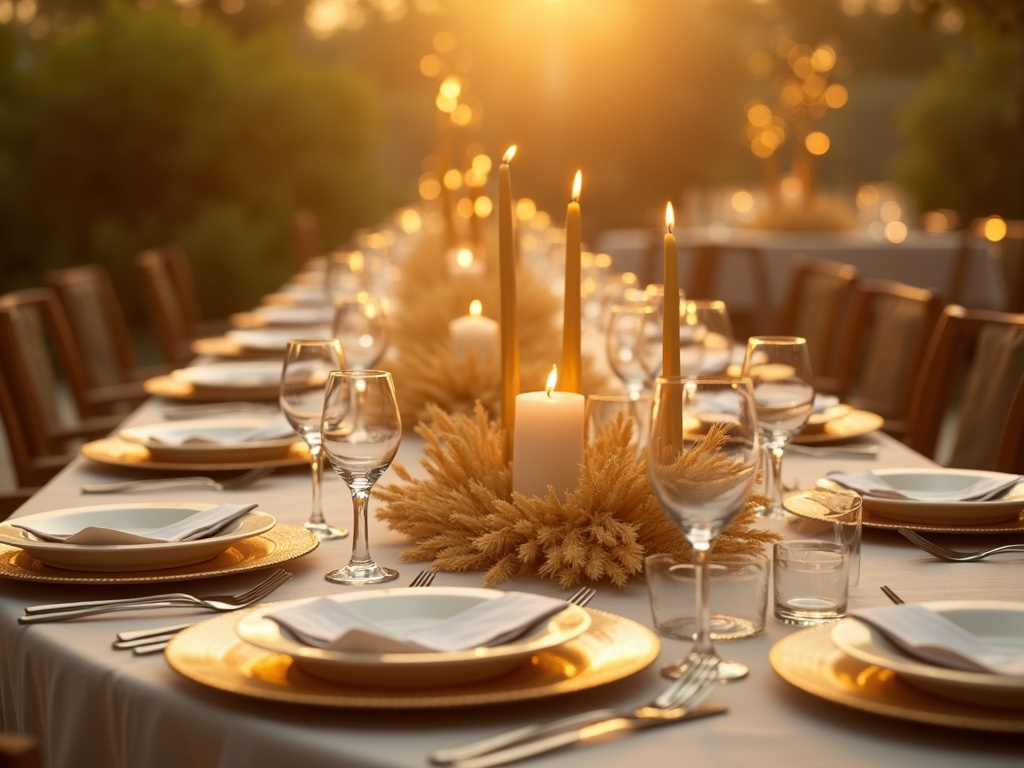
Start by asking the couple what they actually want. This sounds obvious, but it's skipped more often than you'd think. Some people at this stage of life want noise and dancing. Others want a long lunch table in a garden, good wine, and the chance to talk without shouting over a DJ. Neither answer is wrong. Your job as host is to listen before you plan.
If you're organising this as a surprise or a gift to the couple, lean toward the quieter option. Surprises and sensory overload are a difficult combination, especially when the guests of honour are in their seventies or eighties.
The Case for Daytime (and When Evening Wins)
Daytime events have a quiet logic for a 50th anniversary. Light is better, energy tends to be higher earlier in the day, and a long lunch — say, noon until four at somewhere like a private dining room at a country house hotel — gives the celebration a natural shape. It starts, it builds, it ends. Nobody has to navigate home at midnight.
Evening still makes sense if the couple are genuinely night-owl types, or if you're hosting guests flying in from different time zones who need the afternoon to arrive and settle. A candlelit dinner at a restaurant the couple has loved for decades can carry its own kind of meaning that no daytime venue can replicate.
The honest answer is that the time matters less than the atmosphere. Pick the format that lets people sit, eat slowly, and actually talk to each other.
Inviting the People Who Matter Most
A 50 year celebration almost always involves a complicated guest list. There are adult children, grandchildren who range from toddlers to teenagers, old friends scattered across different countries, and possibly people who haven't been in the same room together for years.
A few things worth thinking through before you send a single invitation:
- Give out-of-town guests at least eight weeks' notice — ideally twelve if travel from abroad is involved
- Consider whether young children will be comfortable for the full duration, or whether a shorter window works better for families
- If the couple has friends from different chapters of their life (university, early career, the neighbourhood they lived in thirty years ago), a seating plan that mixes those groups tends to generate better conversation than clustering people by era
- Send a physical invitation if you can — it signals that this is not a casual gathering
For the digital side, Venito lets you send a beautifully designed invitation and track RSVPs in one place, which is genuinely useful when you're coordinating guests across multiple countries and time zones.
Telling the Story of Fifty Years
The most memorable part of any golden wedding anniversary celebration is usually not the food or the flowers — it's the moment when someone tells a story that makes the couple laugh and cry at the same time.
A slideshow is the obvious vehicle, and it works when it's edited ruthlessly. Forty photographs shown in silence with a piece of music underneath is moving. A hundred and forty photographs narrated by someone who keeps losing their place is not. If you're putting one together, aim for a runtime of six to eight minutes maximum, and choose images that span the full arc: early years, children arriving, ordinary Tuesdays, not just the formal occasions.
Beyond the slideshow, consider asking a handful of guests to prepare one minute of remarks each — not speeches, just a memory or a sentence about what the couple means to them. Brief contributions from five or six people, spread across the afternoon, tend to land harder than a single long toast.
A memory book — a physical one, with blank pages passed around during the event — gives guests who aren't comfortable speaking a way to contribute something lasting.
Gifts That Actually Mean Something
Gold is the traditional theme, and you don't have to abandon it — but the most thoughtful gifts at this stage tend to be experiential or deeply personal rather than decorative.
A commissioned piece of art based on the couple's home, a trip to somewhere they've always talked about visiting, or a professionally bound book of family photographs from the last five decades will outlast any ornament. If the family is contributing collectively, a shared experience — a private cooking class, a river journey, a weekend away — often means more than a physical object.
For guests who want guidance, a simple note in the invitation (or on the event page) suggesting a theme — contributions to a travel fund, for example, or donations to a cause the couple cares about — removes the guesswork without being prescriptive.
Fifty years together is its own gift, of course. The celebration's job is simply to make that visible for a few hours — to hold it up to the light so everyone in the room can see what it looks like.